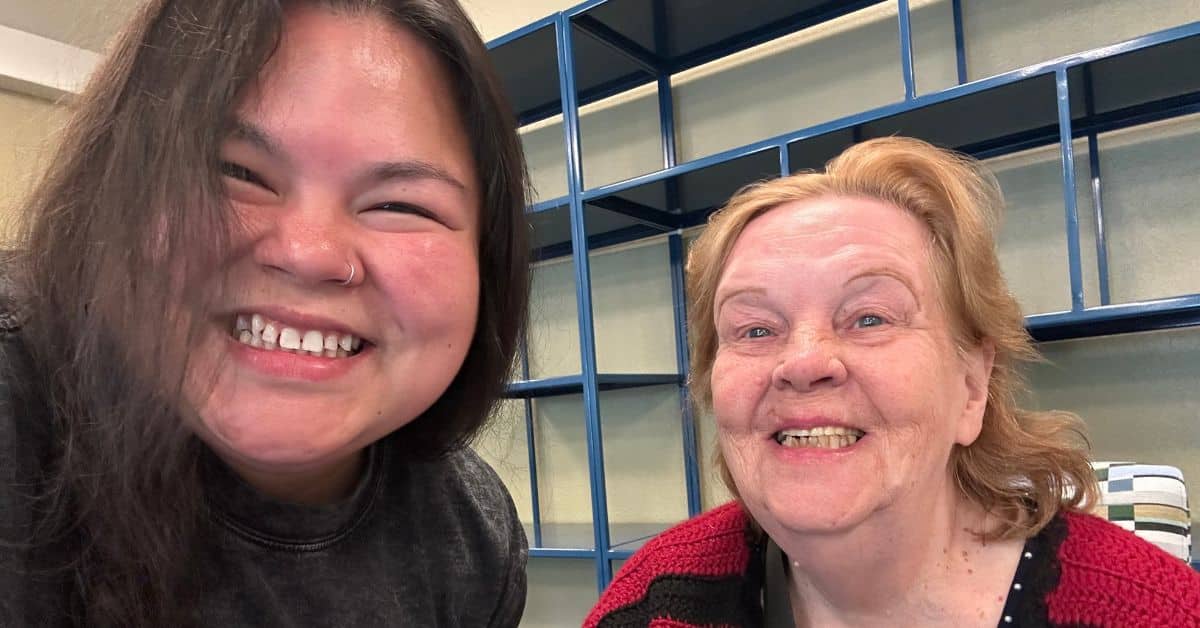


Memory care technology is changing what’s possible. Video calls, messaging platforms and smart devices are giving families new ways to stay genuinely present, to share small moments, offer comfort and remain a steady voice in a loved one’s daily life.
Senior loneliness is more common than you think and when memory loss enters the picture, that feeling of distance can become something far heavier for everyone involved. Miles become more than geography. They become worry, guilt and the quiet ache of not being there.
But the tools themselves are only part of the story. At Cascade Senior Living, meaningful dementia care connection begins with culture: a culture where virtual visits feel natural rather than clinical, where warmth comes through a screen just as it does in person and where staying close across any distance is something families can actually lean on.
Why Does Distance Make Memory Care Communication So Hard?
Practical barriers compound the emotional ones. Over the phone, you might catch a shift in your loved one’s voice or sense something feels off, but assessing their mobility, their environment orr the subtle changes in their health requires being present in ways a call simply can’t provide. Updates from neighbors, doctors or in-home aides help fill in the picture, but secondhand information rarely captures the full texture of how someone is actually doing from one day to the next.
Why Phone Calls Often Leave Everyone Feeling Disconnected
A voice on its own carries meaning, but it carries far less than a face. Phone conversations strip away the facial expressions and body language that help anchor understanding — the very cues that make conversation feel like a genuine connection. Without them, even familiar exchanges can feel strained or confusing for everyone involved.
For someone living with dementia, these challenges are more pronounced. Following complex sentences, recognizing voices or tracking the thread of a conversation becomes genuinely difficult and over the phone, there are no visual cues to compensate, no expressions to read, no gestures to fill the gaps. What doesn’t get said out loud, the hesitation, the confusion, the struggle to find a word, goes unseen entirely.
This is exactly where thoughtful memory care technology can begin to close the distance.

What Technology Options Help Families Stay Connected Today?
Video Calling: Seeing the Face Behind the Voice
There’s a difference between hearing that someone is doing well and actually seeing it. That’s why video calling has become one of the most meaningful tools families have.
FaceTime is often the simplest starting point; it comes pre-installed on iPhones and iPads and requires just a tap to begin. Zoom works across multiple devices and doesn’t require your loved one to create an account to join a call, which removes a common point of friction. Skype offers cross-platform flexibility across smartphones, tablets and desktops, while WhatsApp supports both text and video messaging through a straightforward interface available on most smartphones.
Messaging: Connection That Doesn’t Require a Scheduled Call
Not every meaningful exchange happens on a video call. Sometimes it’s a photo sent mid-morning, a quick check-in text or a short voice message that says “thinking of you.”
SMS text messaging offers real advantages here; it can be used anywhere, at any time and adapted to a caregiver’s specific preferences, language and needs. Research shows that secure communication technologies are linked to improved psychological well-being and measurably decreased caregiver burden (Aparicio et al., 2025). That’s not a small thing. Consistent, low-pressure contact builds the kind of steady connection that sustains both residents and families over time.
Tablets: Bigger Screens, Less Frustration
For residents with cognitive impairment, the physical experience of using a device matters. Tablets offer larger screens that make faces easier to see and buttons easier to find. People living with early-stage dementia use smartphones and tablets for communication, entertainment, hobbies and daily tasks and when the interface is intuitive, the technology fades into the background and the conversation takes over.
Discover Cascade Senior Living
What families often discover, sometimes quietly, sometimes with real surprise, is that meaningful connection doesn’t require the same room. It requires the right culture, the right support and tools that feel human rather than clinical.
Memory care technology opens that door. But it’s the warmth on the other side that matters most. Simple solutions, built around your loved one’s daily rhythms and comfort, tend to create the most lasting impact. A familiar song shared over a screen. A face that lights up during a video call. A voice that says, without words, I’m still here.
That’s what genuine dementia care connection looks like and it’s something every family deserves access to, regardless of how many miles stand between them.
Cascade Senior Living is here to help your family find what works. Call (253) 474-1741 to learn more about our communities and schedule a tour.
FAQs
Q1. What types of technology are most helpful for staying connected with someone in memory care?
Video calling apps like FaceTime, Zoom and Skype work well for face-to-face conversations, while messaging platforms offer flexible communication options. Tablets with larger screens are easier to use than smartphones and voice-activated assistants like Alexa can help with reminders and simple tasks. Wearable devices with GPS tracking provide monitoring and communication capabilities for families managing care from a distance.
Q2. How does video calling improve communication compared to regular phone calls?
Video calls provide visual cues like facial expressions and body language that help people with dementia better understand conversations. Families can see their loved one’s environment, discuss things happening around them, like artwork or garden plants and pick up on non-verbal signals that indicate how they’re truly feeling. This visual context creates richer, more meaningful interactions that reduce frustration and feelings of disconnection.
Q3. What should families consider when choosing technology for a loved one with memory loss?
Start with simple solutions that fit into existing daily routines rather than introducing multiple new devices at once. Choose devices with large icons, easy-to-use interfaces and features that promote independence without requiring constant supervision. Consider whether the technology will remain useful long-term, has positive reviews and matches your loved one’s comfort level and cognitive abilities.