
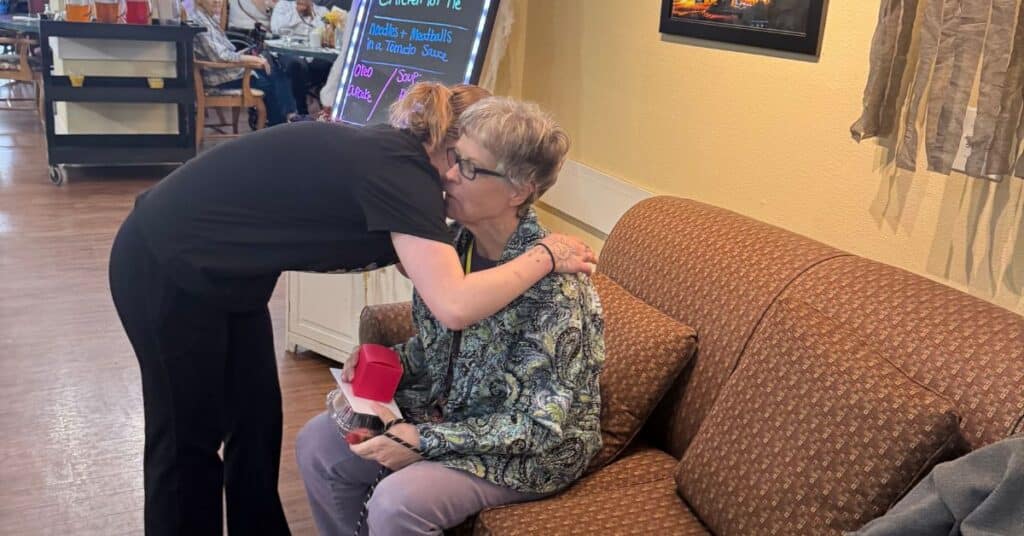
Thanksgiving has a way of making absence feel louder. The traditions you once shared may no longer fit the moment. For families supporting a loved one through dementia, navigating a memory care Thanksgiving can carry as much ache as it does warmth.
When you release the pressure of recreating the past and meet your loved one where they are today, something unexpected can happen, space opens up for moments that are quiet, simple and genuinely meaningful. A familiar song. The smell of something baking. A hand held without explanation.
This guide is about finding those moments. It’s about adapting Thanksgiving in ways that honor your loved one’s current reality, ease the weight caregivers carry and still leave room for your family to feel the togetherness this season is really about.
Learn More About Our Memory Care
What Makes Thanksgiving Different In Memory Care Settings?
What feels festive to you can feel disorienting to someone living with dementia. Flickering lights, layered decorations, music competing with conversation- these are the signals your brain reads as celebration. But for your loved one, that same environment can register as confusion, even alarm. Sensory overload doesn’t announce itself. It quietly builds until withdrawal or agitation is the only available response.
How Dementia Changes What the Holiday Can Look Like
Cognitive shifts affect the holiday in ways that catch families off guard. Your loved one may not recognize relatives they haven’t seen in a while, even ones who were once close. They may not remember why everyone has gathered or connect the day to any particular meaning. In earlier stages, this might be subtle, easy to miss in a brief interaction.
What Memory Care Resilience Actually Looks Like
Resilience here doesn’t mean pushing through. It means shifting the lens entirely, from what’s been lost to what’s still present.
That might look like your loved one spooning whipped cream onto a pie rather than baking it from scratch. It might mean building the day around their energy levels instead of family tradition. It means protecting routine where you can, because that familiarity is what creates enough stability for your loved one to actually be present, not just physically, but emotionally.
How Can You Adapt Thanksgiving Traditions For Your Loved One?
Every meaningful adaptation begins in the same place: honest awareness of where your loved one is right now. Not where they were last Thanksgiving and not where you hoped they’d be. The disease stage shapes everything: what they can do, what they enjoy and where they find comfort. Someone in an earlier stage might help fold napkins, choose a playlist or stir a pot on the stove. It just means different.
What Are The Best Sensory-Friendly Activities To Try?
Sensory experiences reach people with dementia in ways that words sometimes can’t. The smell of cinnamon is warming on the stove. The weight of a familiar ornament in someone’s hands. These aren’t small things; they’re bridges.
Aromatherapy with seasonal scents like pine or peppermint can evoke positive feelings without requiring memory to work. A reminiscence box filled with old recipe cards, holiday photos or small decorations from past celebrations gives your loved one something to hold onto, literally and emotionally.

How Should You Plan The Actual Thanksgiving Visit?
There’s a lot that goes into a meaningful visit, but timing might matter more than anything else you plan.
What Time Of Day Works Best For Memory Care Visits?
Late afternoon and evening tend to bring sundowning, a pattern of increased agitation (Mayo Clinic, 2024) and confusion that can unravel even the most carefully prepared celebration. So rather than holding to traditional dinner-hour habits, plan your Thanksgiving gathering while the sun is still up. Work alongside memory care staff to understand your loved one’s daily rhythm, their meal times, their activity schedule and the moments when they tend to feel most settled.
Should You Bring The Whole Family Or Keep It Small?
Smaller is almost always better. A room full of voices, even loving ones, can quickly feel like too much. Guests who visit in small groups or one at a time give your loved one space to actually connect rather than just endure the crowd. The goal isn’t the number of people in the room. It’s the quality of what happens inside it.
What If Your Loved One Doesn’t Recognize You?
It’s one of the hardest moments a family can face and it happens more often than people expect. Before the visit, share photos and tell familiar stories so that expected guests feel less like strangers when they arrive. A phone or video call ahead of time can help, too. Some families find it meaningful to create a simple written invitation with their loved one’s involvement, something that prepares them for what’s coming and keeps the celebration from feeling like a surprise.
Peoples Senior Living Support
Thanksgiving doesn’t have to look the way it used to. It just has to feel like something real, a moment of warmth, a shared smile, the quiet comfort of being together.
The smallest moments often carry the most weight. A favorite song is playing softly in the background. The smell of something familiar was coming from the kitchen. Sitting close enough that your loved one knows, without words, that they are not alone.
Peoples Senior Living is here to help your family find those moments. Reach out to our team at (253) 474-1741 to schedule a tour and for personalized guidance on planning a Thanksgiving visit.
FAQs
Q1. How often should I visit my loved one in memory care during the holidays?
Visit frequency depends on your loved one’s needs and your capacity, but quality matters more than quantity. Schedule visits during morning or early afternoon hours when they typically function best and avoid late afternoon or evening when sundowning may cause confusion and agitation.
Q2. What should I say when my loved one doesn’t recognize me during Thanksgiving?
Stay calm and avoid correcting them or insisting they remember you. Instead, focus on being present in the moment, share photos, tell familiar stories or simply sit together enjoying music or a favorite activity. Prepare them before your visit by showing photos and arranging phone or video chats.
Q3. How can I create a relaxing environment for someone with dementia during Thanksgiving celebrations?
Keep gatherings small with only a few visitors at a time to prevent sensory overload. Prepare a quiet retreat space with familiar comfort items like a loved blanket or stuffed animal where your loved one can escape if overwhelmed. Maintain their normal routine as much as possible, use soft lighting, play familiar music from their past and remove tripping hazards from decorations.