Senior living

Reframing Senior Living Access: Medicaid and the Promise of Care

senior living

By Jen Drake, Director of Business Development and Aryk Davenport, Marketing Specialist, Cascade Senior Living Services

Navigating Medicaid can feel like learning a foreign language — one filled with acronyms, forms, and fine print that make families wonder if they need a translator just to get care. I’ve seen the frustration and fear that come when an aging parent needs help finding senior living in Tacoma, WA, but the path forward feels buried in bureaucracy. At Cascade Senior Living Services (CSLS), we believe access to care shouldn’t feel that way. We’re reframing how families experience Medicaid — turning confusion into clarity and policy into people-centered compassion for those seeking a personal care home.

The Evolution of Senior Living 

Historically, senior living sat a few steps below skilled nursing — meant for older adults who could walk independently, self-transfer, and manage their basic needs within their senior apartments. But when care needs increased, residents were often discharged to hospitals because “assisted living” wasn’t equipped to support higher acuity.

That model no longer works. Post-COVID realities and looming funding reductions have reshaped healthcare entirely. Hospitals are overwhelmed. The discharge loop between assisted living and hospital care is broken. So, we decided to reframe the traditional retirement community from the ground up — not as a temporary stop between independence and institutionalization, but as a place where people can truly age in place.

From Discharge to Dignity: Building Wraparound Support

We started by asking one question: What if assisted living could be the solution, not the stopgap?

By integrating wraparound medical and behavioral services directly into our communities, we’ve reduced unnecessary hospital discharges dramatically. Pre-pandemic, one of our locations averaged six to eight resident discharges each month. Today, that number has dropped to about six per quarter.

We’ve built partnerships that bring the full continuum of care to our residents’ doorsteps — cardiologists, podiatrists, primary care, audiologists, dental hygienists, and mental health clinicians all visit on-site. We’ve worked hand-in-hand with local hospitals to get creative, collaborating on personalized care plans that keep residents safe, supported, and right where they belong — home.

This is what reframing access looks like: access to care, access to stability, and access to a life with fewer interruptions and more continuity.

Medicaid Still Covers Care — But the Details Matter

  • The good news: Medicaid continues to cover assisted living, memory care, and adult day health in Washington State.
  • The challenge: eligibility rules and processing timelines have grown more complex, with even small financial details — a life insurance policy, a gift given years ago — creating ripple effects.

According to the National Institute on Aging, Medicaid is the primary public payer for long-term care services, making it a vital lifeline for older adults who require assistance but cannot afford out-of-pocket costs indefinitely (National Institute on Aging (NIA) / U.S. Department of Health & Human Services, 2023)

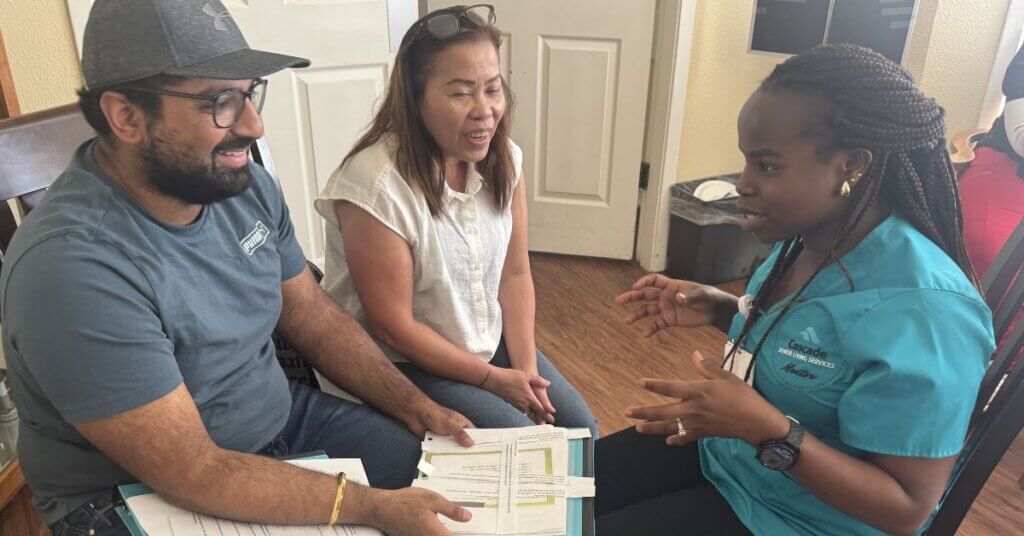
Our teams walk families through the process, partnering directly with case managers and local agencies to simplify the process. Because behind every Medicaid application is a story — a spouse trying to provide comfort, an adult child balancing work and caregiving, a family doing their best to navigate an unfamiliar system to secure senior housing with care services.
Access as a Promise, Not a Privilege

As a safety-net provider at many of our locations, we’re proud to accept Medicaid and offer flexible spend-down options so that financial limits never define a person’s access to quality care. For us, this isn’t just about meeting requirements — it’s about redefining what compassionate access looks like.

We believe care is not a privilege reserved for those who can afford it. It’s a promise to those who need it most. And in our communities, that promise is alive and well — through transparency, advocacy, and a relentless belief that everyone deserves a place to belong.

Looking Ahead

The future of senior living depends on our willingness to adapt, to innovate, and to lead with heart. At Cascade Senior Living Services, we’re reframing access not just for today’s seniors, but for the generations who will follow — creating a model of care that blends humanity, health, and hope.

Because at the end of the day, access isn’t about forms or policies. It’s about people — and every person deserves the dignity of exceptional care.

Need Help Navigating Medicaid?


Our team can guide you through every step of the process — from eligibility to enrollment and beyond. Call Cascade Senior Living at 360-602-6880 or visit our website www.cascadecares.com. We are proudly serving families across Pierce County and the South Sound region.

FAQ’s

Q1. Does Medicaid pay for assisted living in Washington State? Yes, Medicaid continues to cover assisted living, memory care, and adult day health in Washington State, though eligibility rules and processing timelines can be complex to navigate.

Q2. How do I find Medicaid-approved senior living in Tacoma, WA? Look for safety-net providers like Cascade Senior Living Services. We proudly accept Medicaid and offer flexible spend-down options to ensure financial limits do not prevent access to quality care.

Q3. Can seniors age in place in an assisted living community? Yes. By integrating wraparound medical services—like on-site primary care, cardiologists, and mental health clinicians—modern assisted living communities allow seniors to age in place safely and avoid unnecessary hospital discharges.
Assisted living

Rethinking Assisted Living: How Grounded Living Preserves Who You Are

assisted living

When you’re considering assisted living in Tacoma, WA, you’re really asking one crucial question: Will I still be myself? Traditional communities often feel like you’re adapting to their world, fitting into routines and spaces that feel foreign. Grounded living takes a different approach. This philosophy preserves your identity by creating environments rooted in natural light, unhurried care and spaces that honor your life’s journey rather than erase it.

Choosing assisted living shouldn’t mean losing yourself. The right assisted living community becomes an extension of yourself, supporting your well-being while honoring the person you’ve always been.

Ask specific questions about personalization and care transitions during community tours to ensure the community genuinely supports your individual needs and preferences. Proactive planning prevents traumatic relocations by choosing communities that accommodate changing care needs without forcing you to abandon familiar environments and relationships.

What Does It Mean To Preserve Who You Are In Assisted Living?

Who you are flows from decades of morning routines, favorite coffee mugs and conversations with people who know your stories. Your identity lives in daily rituals, personal treasures and the freedom to express what matters to you. When considering assisted living in Tacoma, WA, preserving who you are means honoring these connections rather than leaving them behind when you walk through the doors of a care community.

Why traditional assisted living often feels disconnected from your identity

Most communities ask you to fit into their world instead of adapting to yours. Research reveals that institutional environments create “bounded identity” where you must give up personal belongings because rooms are too small, wear clothing chosen for staff convenience rather than your preferences and join activities that ignore what actually interests you (Paddock, K., et.al, 2019). The medical model prioritizes efficiency over the small moments that make you feel like yourself. Predetermined wake-up times, standardized meal schedules and inflexible routines strip away the patterns that have shaped your days for years. When you lose control over personal care decisions, your sense of self begins to fade.

Social networks gradually disappear as friends pass away and family members relocate. Without these meaningful relationships, you lose the people who remember your stories and reflect back the person you’ve always been. This erosion of authentic connections strikes at the heart of who you are.

Grounded living in Washington focuses on continuity, not change

Grounded living protects your identity by supporting what endures while accepting necessary adjustments. Your sense of self stays strong when you maintain connections to the meaningful parts of your past. Your surroundings should feel consistent with your personal history, creating the foundation for healthy adaptation. If mountains shaped your childhood, glimpsing forest views through your window keeps you anchored to your sense of place.

Personal treasures filled with memories become bridges that carry valued parts of yourself into new environments. Small daily accomplishments like helping set tables during meals allow you to hold onto pieces of your identity even when physical abilities shift.

How Does The Cascade Approach Honor Your Life’s Journey?

Your life flows like water, carrying forward the experiences and connections that make you who you are. Cascade Senior Living draws its name from this gentle understanding: your later years deserve to unfold naturally, not through jarring disruptions that wash away your identity.

What does the Cascade philosophy mean for aging with grace?

Continuity shows that you naturally work to preserve what matters most about yourself when facing life changes. The person you were at 45 remains at your core at 75 or 85. The cascade approach creates spaces where new chapters connect to your cherished past, allowing your personality and social connections to flow forward intact.

Smart planning helps you navigate age-related challenges while keeping your authentic self strong. When health concerns or other obstacles appear, thoughtful coping strategies maintain your quality of life. Think of it this way: the cascade moves gracefully around rocks in its path rather than crashing against them.

How Your Physical Environment Shapes Your Daily Experience

Your surroundings affect your health in ways that go far beyond simple comfort. When you’re choosing assisted living in Tacoma, WA, the physical space becomes part of your daily wellness routine. Bright, open areas create real improvements in how you feel and function, while cramped, artificially lit spaces can accelerate decline.

assisted living

Why morning light becomes your natural medicine

Natural light exposure works directly with your circadian rhythms, the internal clock that controls your sleep, mood and mental sharpness. Research from the National Institutes of Health found that participants with higher morning light exposure between 6:00 and 12:00 had significantly less fragmented and more stable rest-activity rhythms (Juda, M., et.al, 2020). This stability matters because fragmented activity rhythms predict impaired cognitive performance.

How Calm Environments Support Your Emotional Health

Open floor plans in assisted living in Washington connect dining rooms, living areas and activity spaces in ways that feel natural. These designs encourage spontaneous conversations and reduce feelings of isolation. Indoor gardens, water features and natural wood materials create measurable reductions in blood pressure and stress levels. 

When nature becomes part of your daily environment, you experience real improvements in emotional well-being and recover from illness more quickly.

Your identity doesn’t disappear with age; accordingly, your living environment shouldn’t force you to abandon it. Grounded living at Cascade Senior Living preserves the essence of who you are through natural spaces, flexible routines and care that honors your life’s journey. The right assisted living community becomes an extension of yourself rather than a departure from it. Call us at 360-602-6880 to discover how our philosophy supports your continuity throughout every transition.

FAQs

Q1. What are the core principles that define quality assisted living? Quality assisted living is built on person-centered care that focuses on individual needs rather than institutional convenience, ethical practices that establish trust between residents and staff and a clear mission statement that guides daily operations. These principles ensure that care adapts to you rather than forcing you to adapt to rigid systems.

Q2. How can you determine if an assisted living community will truly preserve your sense of self? Look for communities that allow you to bring personal furniture and pets, give residents meaningful input in meal planning and activities and support resident councils. The ability to personalize your space and maintain daily routines that reflect your preferences indicates a genuine commitment to preserving your identity.

Q3. Why does proximity to family and natural surroundings matter in assisted living? Location affects your ability to maintain meaningful relationships with family and friends who know your story. Additionally, access to natural light, views of landscapes and connection to outdoor spaces provide measurable health benefits, including improved sleep patterns, reduced depression symptoms and better cognitive function.

Assisted living

Red Flags That Say “Memory Care, Not Assisted Living”

assisted living

One of the most painful mistakes families make when exploring senior living in Tacoma, WA, is waiting too long to choose memory care. Assisted living in Tacoma, WA, works well for people who can still stay oriented, follow instructions, and ask for help with activities of daily living (ADL)

Navigating senior living in Tacoma, WA, can be overwhelming for families. If your loved one is wandering, missing medications, or experiencing behavioral changes, standard assisted living may no longer be safe. Review these critical red flags that indicate an immediate need for specialized memory care.

But when the brain begins to lose its ability to keep a person safe, assisted living simply is not designed to meet those needs. If two or more of the following red flags are happening, a standard retirement community or assisted living is likely to fail — and that failure often comes in the form of falls, hospitalizations, or sudden crisis moves.

Recognizing the Limits of Assisted Living

The first major warning sign is wandering or getting lost. When someone walks out of the house, becomes confused in familiar places, cannot find their room in their senior apartments, or tries to leave buildings, this is no longer “mild memory loss”. It is life-threatening. According to the National Institute on Aging, a vast majority of people with Alzheimer’s disease or related dementias will wander away from their homes or caregivers, making it a critical safety issue that standard assisted living environments cannot manage (National Institute on Aging, 2024).

Another key red flag is when a person forgets they already did something — taking medications twice, eating twice or not at all, showering again, or calling people repeatedly. These patterns lead directly to overdoses, dehydration, and medical emergencies.

Physical and behavioral warning signs

When someone no longer understands their physical limits, the danger grows. Trying to walk without a walker, getting up without help, using the stove, driving, or fighting for assistance often leads to falls, burns, and broken bones.

Emotional and behavioral changes are another critical signal. Sudden anger, accusations of stealing, paranoia, panic, or physical outbursts are not personality changes — they are symptoms of dementia-related brain damage. Even assisted living with 24-hour nursing is not staffed or trained to safely support these behaviors. Memory care is.

Confusion about place is also a major red flag. When someone asks to “go home” while already at home, believes they are in a hotel, or does not recognize their building, fear sets in — and fear fuels agitation, distress, and unsafe behavior.

The inability to use a call button reliably is another important sign. Assisted living depends on residents being able to ask for help. When a person can no longer remember to press it, explain what’s wrong, or wait for assistance, they need the constant eyes and rapid response that memory care provides.

When standard care becomes a risk

Finally, when a person no longer recognizes caregivers, trust disappears. Without recognition, help feels threatening. Resistance increases. Fear grows. Unlike a basic personal care home, memory care offers higher staffing, predictable routines, gentle redirection, and reassurance that allows people to feel safe again — even when memory is failing.

Making the Move from Assisted Living in Tacoma, WA to Memory Care

Families often wait because they say, “They’re not that bad yet”. But dementia is not about how someone looks on a good day. It’s about what happens at two in the morning, when they wake up scared, forget where they are, can’t find the bathroom, or fall. Memory care is not a punishment. It is a seatbelt for a brain that can no longer keep itself safe.

The hardest truth — and the most loving one — is that people with dementia are often calmer, safer, and more at peace when they move into memory care earlier rather than later. They sleep better. They eat better. They get hurt less. Waiting until a crisis leads to ambulances, emergency rooms, hospital delirium, forced moves, and trauma. Choosing memory care sooner at Cascade Senior Living means peace, safety, dignity — and far fewer regrets. Call us at 360-602-6880

assisted living

FAQs

Q1. What is the difference between assisted living and memory care? Assisted living is for seniors who can still navigate their environment safely and ask for help. Memory care provides 24/7 specialized supervision, secure environments, and staff trained to handle dementia-related behaviors like wandering and confusion.

Q2. When is it time to move a parent to a memory care community? It is time for memory care when a parent begins wandering, forgetting to eat or take medications, experiencing sudden outbursts, or losing the ability to reliably use a call button for help.

Q3. Is wandering a sign that my loved one needs memory care? Yes. Wandering or getting lost in familiar places is a life-threatening red flag that indicates standard assisted living is no longer safe. Memory care facilities have secure exits and specialized monitoring to prevent wandering.

Senior living

Beyond the Tour: Understanding True Integrity in Senior Living

senior living

When you’re choosing senior living in Tacoma, WA, the polished tour only tells part of the story. Your loved one will spend their days in the moments between those carefully orchestrated visits. The beautiful common areas and friendly faces during your scheduled appointment matter, but what happens at 2 a.m. when someone needs help matters more.

Transparency builds trust and enables families to make informed decisions for senior living. Without openness in operations—including clear communication about care changes, honest billing practices, accessible visitation policies and straightforward responses to concerns—families cannot accurately assess whether a community will provide the consistent, quality care their loved ones deserve.

Every family wants to feel confident about their choice. You want to know that the care your loved one receives on Tuesday afternoon matches what you observed during Sunday’s tour. The difference between a community’s promises and its daily reality affects not just the quality of care, but your peace of mind as well.

What Does Integrity In Senior Living Really Mean?

The word “integrity” appears everywhere in senior care marketing materials, but what does it actually mean when you’re choosing an assisted living community? Real integrity means complete, honest information about residences and services. This reaches far beyond beautiful amenities or friendly staff during scheduled visits.

Integrity means more than marketing promises

Marketing language in senior living often confuses rather than clarifies. Take how communities describe nursing services. An advertising “24-hour nursing services” might have one licensed nurse during day shifts and use an on-call system for nights and weekends. While technically accurate, this phrasing misleads families who interpret it as round-the-clock on-site registered nurses. The National Center for Assisted Living (NCAL) emphasizes that undisclosed or exaggerated information damages relationships between residences and customers, diminishing trust permanently (NCAL, 2022).

Honest marketing requires precision. Instead of vague terms, communities with genuine integrity state clearly: “Our residence has an on-site nurse each weekday and on-call nursing services at all other times”. This clarity allows families to make informed decisions based on actual service delivery rather than wishful language.

Tours show you what they want you to see

Tours showcase what communities want you to notice. You’ll see bright smiles, exercise classes and perhaps live entertainment in the lobby. What stays hidden are the crucial details: 2 a.m. staffing levels, response times to emergency calls and how communities handle medical events and falls.

Families need to dig deeper

Maintaining the integrity of seniors in long-term institutions affects their physical, psychological and overall quality of life. Relatives who felt admission to communities had been problematic perceived that residents’ integrity was poorly maintained. This highlights why your initial research and evaluation process matters so much.

State inspection reports, unscheduled visits and conversations with current residents provide windows into daily operations that scheduled tours cannot. Communities must place greater emphasis on cooperation between residents, their relatives and nursing staff. Communities practicing genuine integrity welcome these deeper investigations rather than discouraging them.

Signs of Genuine Care During Ordinary Moments

Quality communities reveal their true character during everyday interactions, not scheduled presentations. These quiet indicators show how staff treat residents when tours aren’t happening.

Staff interactions during unscheduled visits

Watch how staff and residents communicate during your visits. Staff form meaningful relationships with coworkers, residents and family members in person-centered care environments. When you see residents and staff interacting easily and comfortably, their relationship has been built on trust and dignity, indicating time spent together. This stands apart from communities where staff appear rushed or disconnected from the residents they serve.

Daily cleanliness and maintenance standards

Housekeeping teams can’t maintain perfection constantly in busy communities, but clean and welcoming shared spaces indicate quality care. Communities should smell fresh, with resident rooms clean and well-maintained. Cleaning and disinfecting of common areas, bathrooms and surfaces like doorknobs and handrails minimizes infection risk.

Poor hygiene, including residents wearing the same clothes repeatedly or appearing dirty, signals potential neglect. Residents who look clean and well-groomed receive necessary support with activities of daily living.

Resident participation in daily life

Residents should appear lively and engaged rather than isolated. Look for residents involved in both group activities and independent pursuits like reading or listening to music.

Why Transparency Creates Genuine Trust With Families

Transparency forms the foundation that allows families to build confidence in their choice. Without honest, open communication about daily operations, families cannot truly know whether their loved one will receive the care they deserve.

Keeping families connected 

Families who feel included in their loved one’s care journey become partners in the process rather than worried observers. Regular updates about health changes, activity participation and care adjustments strengthen the bond between families and care teams. This communication should feel natural and caring, tailored to each family’s preferences and concerns.

Building staff who care

Staff training should focus on creating caregivers who understand their impact on residents’ lives. Regular check-ins throughout the year, rather than once-yearly reviews, help staff stay connected to their purpose and improve their skills.

senior living

Addressing concerns 

Residents must feel good about expressing concerns without worry about poor treatment afterward. Quality communities maintain clear processes for handling complaints and provide written responses that explain what they discovered and how they plan to make things better.

Genuine Care

Choosing senior living in Tacoma, WA requires looking beyond polished presentations to observe daily realities. Ultimately, integrity reveals itself through consistent staffing, transparent communication and genuine resident engagement during ordinary moments. Call Cascade Senior Living at 360-602-6880 to ask specific questions about care delivery, response times and family access policies. Your loved one deserves a community that maintains excellence when no one is watching, not just during scheduled tours.

FAQs

Q1. What are the core principles that define quality senior living? Quality senior living centers on three fundamental principles: independence, autonomy and personal dignity. These residences should empower residents to make their own choices while providing necessary support, maintaining a balance between assistance and self-determination that respects each individual’s capabilities and preferences.

Q2. How can families tell the difference between marketing promises and actual daily operations? The key difference lies in observing unscheduled moments rather than planned tours. While tours showcase polished presentations and scheduled activities, true quality reveals itself through staff interactions during off-peak hours, response times to resident requests, cleanliness during visits and conversations with current residents about their everyday experiences.

Q3. What role does staff integrity play in healthcare settings? Staff integrity forms the foundation of trust between residents and caregivers. It encompasses ethical values and moral principles that guide interactions with residents, families and colleagues. This integrity becomes especially critical during overnight hours and unobserved moments when caregivers must consistently do the right thing without supervision.